
Lighthouse exploring is many things, but it is not an adventure for the faint of heart. At this point I’ve been on many a lighthouse explore, but Norfolk wins all of the awards for most physical pain and the worst weather. My feet occasionally still feel the Ghosts of Blisters Past.
Prior to setting out on this trip, I’d had a dilemma about how far I was planned to walk. My original plan was to walk solo from Cambridge to Happisburgh Lighthouse, an 80-mile endeavour which would have included a lot of walking on main roads.
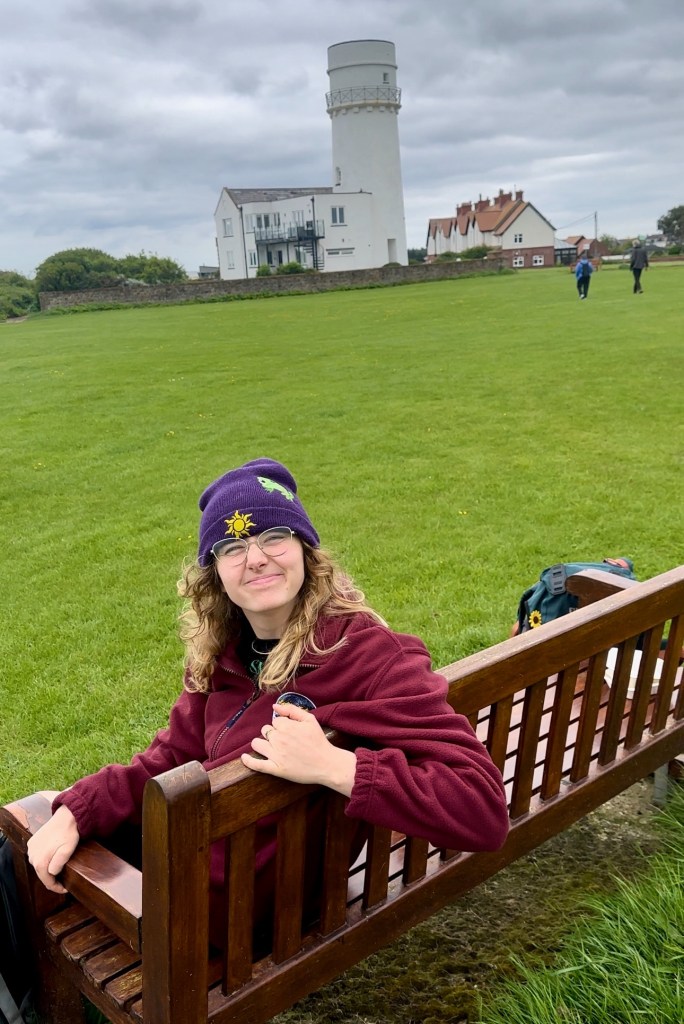
Retrospectively, this would have been a horrible trip. I would have attained god levels of character building – but at what cost?
Ultimately the plan evolved to a lovely 50-mile hike over three days, trailing from Old Hunstanton Lighthouse to Happisburgh Lighthouse along the Norfolk Coastal path. My partner Felix is a very good sport, and part mountain goat, so he also committed to the trek.
The Beginning: Old Hunstanton Lighthouse
The walk started at Old Hunstanton Lighthouse, a lovely little lighthouse turned B&B. The first lighthouse was built on the site in 1665, but the current tower was constructed in 1844. It’s been out of action for over 100 years, after it was replaced in 1922 by a lightship. I visited this lighthouse in 2021 on my first Norfolk lighthouse tour, and I can’t say it’s changed a great deal. The main difference was the weather – in 2021 I could actually see the sun!
After a cheese and egg bap, we joined the coastal path onwards to Happisburgh. Initially, the weather was dry and still (foreshadowing of what was to come).
Almost immediately, we hit a snag. The coastal path curved away from the sea and towards the mainland. If we wanted to take a shortcut, we’d need to cross a small body of water of unknown depth.
“No problem!” We probably said in glee, “we’ll cross this pond in no time, with no consequences!”
We removed our shoes and socks in haste, and I went first, stepping into the ankle deep water. Straight away, my feet began to sink into black silt. Upon stepping into the water I suddenly noticed how badly it smelt. However, there didn’t seem to be many options at this point.
I could’ve A) turn around, put my shoes back on, and gone the longer route around the body of water, or B) continue on, and hope it got no deeper or smellier. The issue with A was that the damage had already been done. My feet were past the point of no return. Also, I really didn’t want to walk more than needed! There were 49 miles to go, and if we could save a mile, then we probably should.
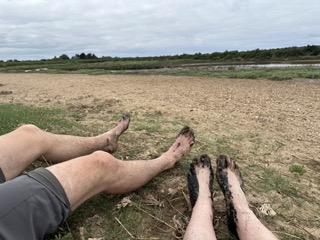
So B it was, we both waddled across the water through to the other side. At one point, Felix looked like he was going in but managed to recover himself. In an alternate universe, he probably spent the rest of the hike covered in smelly, black gunk. The consequences of having wet and gross feet from the beginning of the day would later come to pass, but in the moment we were congratulating ourselves on our bravery, and lording our success over two older walkers, who’d had to walk all the way round. Life was good.
The Beginning of the End
That’s a dramatic heading, but it was a dramatic walk. The first day went without a major hitch. We walked for 12 miles to a lovely B&B above a pub, and ate a meal that would have satisfied Henry VIII. Warning signs had started to develop on my feet; the wet conditions and constant friction had given blisters the perfect environment to thrive. At this point they were manageable, although not pleasant.
Rain greeted us on the second morning. At first it was light and playful, but very steadily it was building up. My feet had already started off the day with some vulnerable areas, and I could feel them getting very moist yet again.
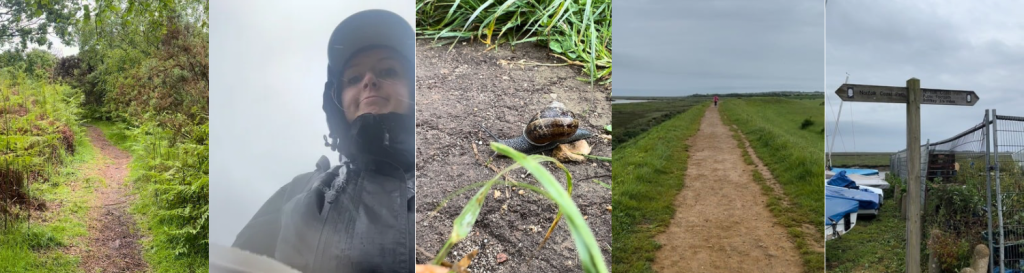
After 6 miles, I could feel the entire surface area of my blisters with every step. I estimated that at least 45% of my left and 56% of my right foot were probably more blister than soft skin. There were around 32 miles of the trek, and I struggled to walk. Crestfallen doesn’t begin to cover it.
I’d underestimated the socks I’d need, and failed to bring any blister-proofing materials. I’d underestimated the walk.
The Norfolk Coastal Path then took a turn away from the coast, and began a long stretch through residential areas and along roads.
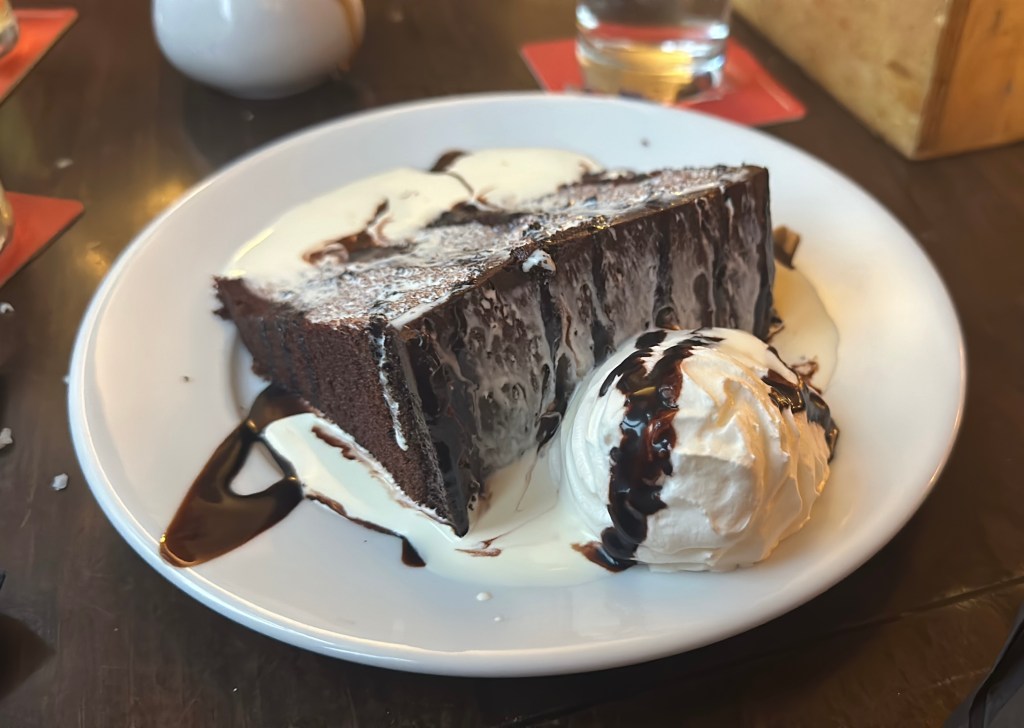
The morale that the sea had brought me was cruelly ripped away, and tempting little bus stops began to appear. When all hope was lost, we came across a little cozy pub with cheesy cauliflower pieces brought on a platter directly from the gods. It was followed by a chocolate cake which matched the main course in pizzazz and flavour.
My feet had not recovered, but I felt lighter on them (despite consuming 2,000+ calories). We walked to rejoin the coastal path, but the rain grew heavier. We collected takeaway teas from the National Trust café window and stood under the overhang to wait out the worst of the rain. The rain quickly became torrential, hammering the roof of the hut and dripping through onto our sodden heads.
A group of walkers appeared in the distance. The specks quickly turned into 4 people sprinting down the path, being pummelled by the Great Norfolk Monsoon. I felt happy I wasn’t in their shoes until they all bundled into their nice, warm car.
After the rain receded, we restarted our walk along the Coastal Path. The rain was persistent for the next hour. The cauliflower and chocolate cake high was wearing off, and my blisters had broken along with my spirits.
We got the bus.
The Final Leg (on Broken Feet)
I awoke in a small room above a pub, with feet which had once again bounced back. We quickly hopped onto a bus to get back to the coastal path (although only a few miles away from Happisburgh). The dream of walking 50 miles had died, but it was crucial that we make it to Happisburgh lighthouse. Failure wasn’t an option.

Over hills and across muddy fields, my feet could feel that the end was in sight. We were ravenous and had run out of food, but suddenly the lovely little lighthouse appeared in the horizon.
We ate a couple of biscuits, and stumbled into the nearby pub garden for pints and food. Felix kindly went in to order, and save my feet.
He came out with two pints in hand, but no menus. Unfortunately, a large group were due to arrive and the kitchen wasn’t accepting any other food orders. After a quick google, we found there was one other food option nearby but it only served sandwiches. Beggars can’t be choosers, so we readied ourselves for a post-pint sad-wich before the lighthouse. We read in the pub garden as the weather had brightened considerably (pathetic fallacy as we approached the end of our journey).
As we chilled, we spied the huge group that had deprived us of a pub lunch. I secretly hoped that they choked on their chips.
Finally, we left the pub and wandered over to the sandwich bar. As to be expected on this mildly cursed excursion, it was closed for cleaning.
The Final Destination: Happisburgh Lighthouse
We pressed on up to the lighthouse. Happisburgh Lighthouse is one of my favourites in England. It’s the only lighthouse to be independently run; the ‘Friends of Happisburgh Lighthouse’ have looked after it since 1990.
It was due to be decommissioned in 1988 as Trinity House deemed it to be unnecessary, and therefore not worth the running costs. This ruffled the local community, who came together to establish the Happisburgh Lighthouse Trust. This enabled them to keep the lighthouse lit for many years to come. For more information about the ins and outs of this, I’d recommend reading this post on the Happisburgh Village Website.
Finally, we reached the lighthouse itself. This lighthouse has stood since 1790, and is accessible to the general public on specific Open Days.
The story of a community rallying around a lighthouse for over 30 years is a huge part of why I love this lighthouse. It’s a much-loved staple of the community, and it’s in a beautiful spot on the Norfolk coastline.
There’s a small museum and shop on the ground floor of the lighthouse, and then a steep staircase up the lighthouse to the lantern room. Those who are afraid of heights should be warned, one particularly shaky lady had to turn around and go back down.
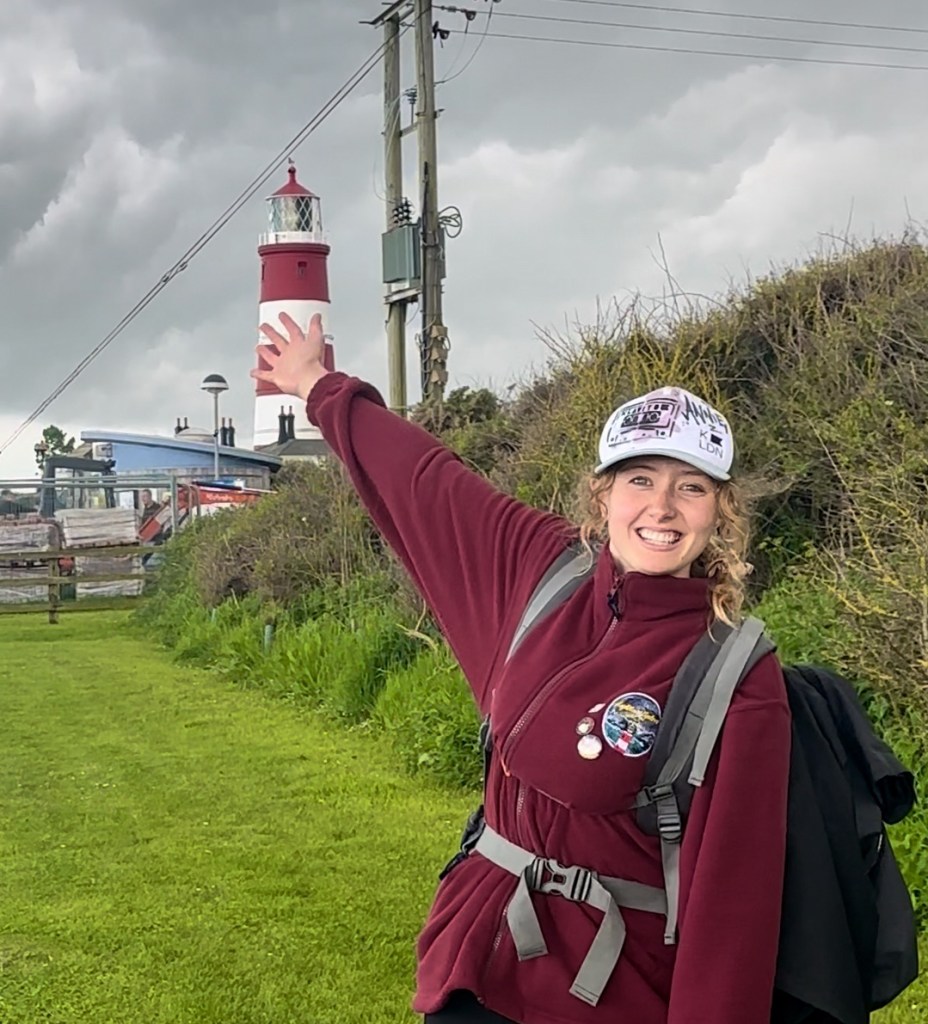
At the top of the lighthouse there’s a beautiful view of the surrounding area. If you have any questions at all, the Friends of Happisburgh Lighthouse are more than happy to help. I’d thoroughly recommend a trip to support them in person, but if you’re unable to, you can also help them remotely through donations. Alternatively, you can even join their ranks (I have).
It seems important to mention that you don’t need to walk 20+ miles to get there, they have a convenient car park nearby.
Conclusion
I’ll skip the story of how we got stranded in Happisburgh after this (don’t rely on buses if you visit on a Sunday), and instead focus on my final thoughts.
This lighthouse explore was more intense than I’d originally imagined. However it was a happy journey, with a beautiful walk and great company.
I would do it again in a heartbeat, I’d just invest in quick-dry socks first.
 Lighthouse Explorers
We are so sorry that you got blistered feet. We used to live in the area and know the lighthouses but never walked all that way. Thanks for sharing your explore.
LikeLike
Aw thank you Bee! It’s a beautiful area; you’re lucky to have lived there. My feet are okay now and I’ve learned valuable lessons about good socks!
LikeLiked by 1 person
That’s the spirit 🤗. Yes, we were very lucky to have lived in Norfolk. We are now in Ireland which is stunning, too. I am new to your blog. Do you also go abroad for light house exploring? I will check out more of your blog later 🙂
LikeLiked by 1 person
Ireland has some amazing lighthouses! I’m hoping to go lighthouse exploring in Ireland next year. I haven’t been abroad for lighthouses yet, but I’ve got some planned trips over the next few years ☺️
LikeLiked by 1 person
That’s great. Am looking forward to follow your adventures.
LikeLiked by 1 person