
It’s been far too long since my last lighthouse-related adventure. Life’s been hectic, but I’ve also had one big thing to look forward to: the Summer of Lighthouse Adventures! This summer will take me on seven different lighthouse group trips, plus a spectacular cycling expedition along part of the Irish coastline.
The 2024 Group Trips
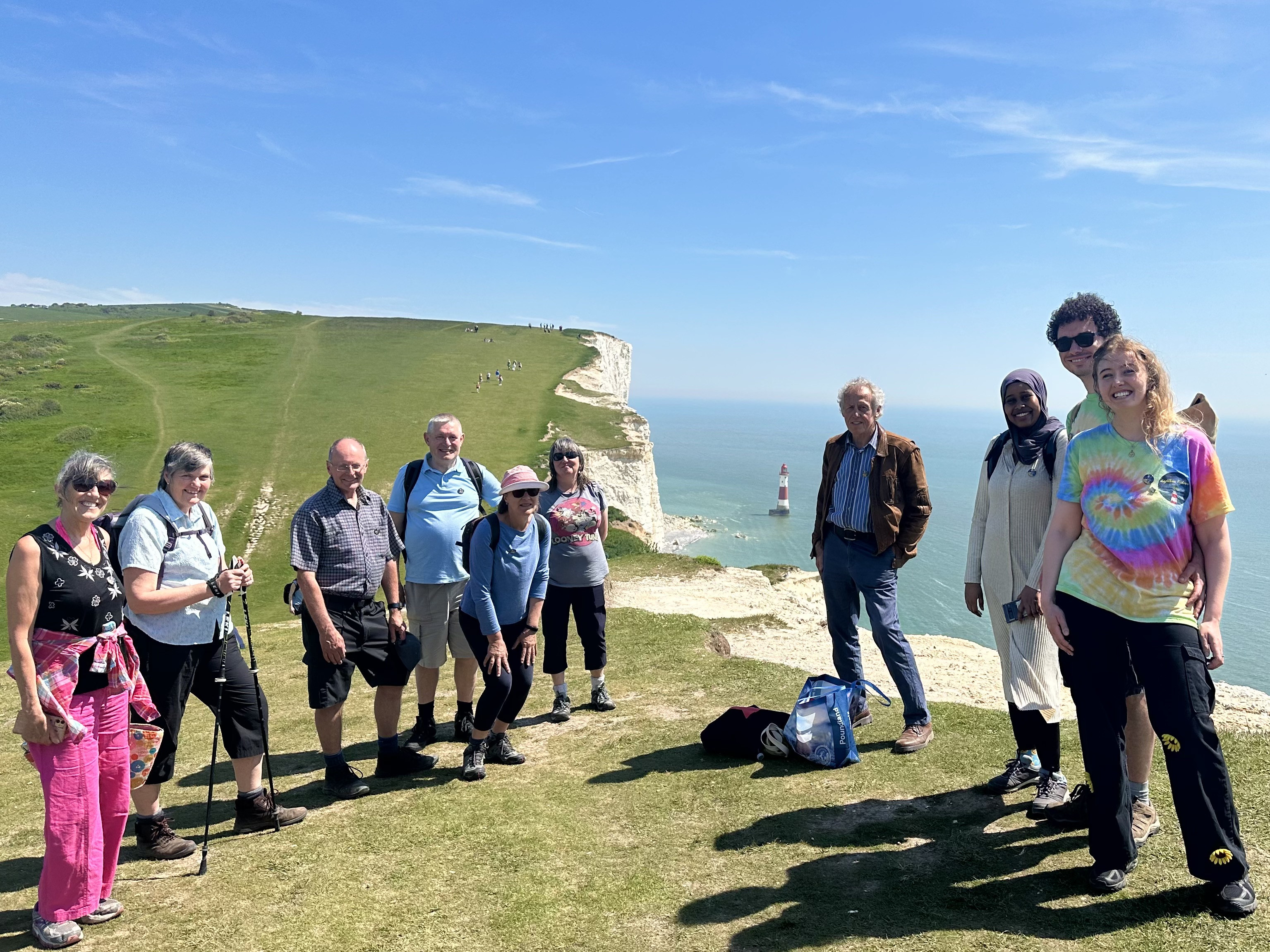
In 2024, I organised three Lighthouse Explorers group trips. The first was a huge success. Eleven of us hiked the Eastbourne cliffs around the Beachy Head and Belle Tout lighthouses. The weather was beautiful, the turnout was great (despite a few no-shows), and everyone had a fantastic day.
The next two trips—Dungeness and Nash Point—were slightly less of a success, largely due to my less-than-stellar marketing efforts. The Nash Point trip ended up being a solo outing, with just me in attendance. Despite the low numbers, I still enjoyed opening up my solo adventures and was convinced that 2025 should be bigger, better… and better promoted.
Off to Plymouth for the first group trip of 2025
The first group trip of this season took us to Plymouth, which is a place that holds a very special spot in my heart. It was my second time visiting Plymouth Hoe to see Smeaton’s Tower; my first visit was one of my earliest solo lighthouse trips.
This stretch of coastline is rich in lighthouse history, thanks to the treacherous Eddystone Reef offshore. Infamous for shipwrecks—including two of Henry Winstanley’s own five ships—it led to the construction of the very first Eddystone Lighthouse, which also happens to be my all-time favourite: Winstanley’s Lighthouse. (We’ll delve more into its dramatic history later.)
Before this trip, my partner and I moved our narrowboat to Little Venice, just a stone’s throw from Paddington Station. From there, we hopped on a Great Western train straight to Plymouth.
We explored the local coastline near the lighthouse, popped into The Waterfront pub for a Guinness, and soaked up the beautiful views (and the pints).
Day One: Smeaton’s Tower
At midday on Saturday, we met up with the rest of the group at Smeaton’s Tower. The lighthouse, now a museum, is cared for by The Box—a museum, gallery, and archive space based in Plymouth city centre. The Box also manages the Elizabethan House, an immersive museum experience in the Barbican area.
Smeaton’s Tower feels like a living museum. Unlike the Old Lighthouse in Dungeness, which has been mostly stripped out to house maritime exhibits, Smeaton’s retains the feel of a functioning lighthouse. It’s like the keeper has just stepped out for a moment, leaving you to poke around. There’s a tiny stove and cupboard in the kitchen, and narrow alcoves in the bedroom where the keepers would have slept. It gave us a real sense of what life might have been like tucked away on the reef.
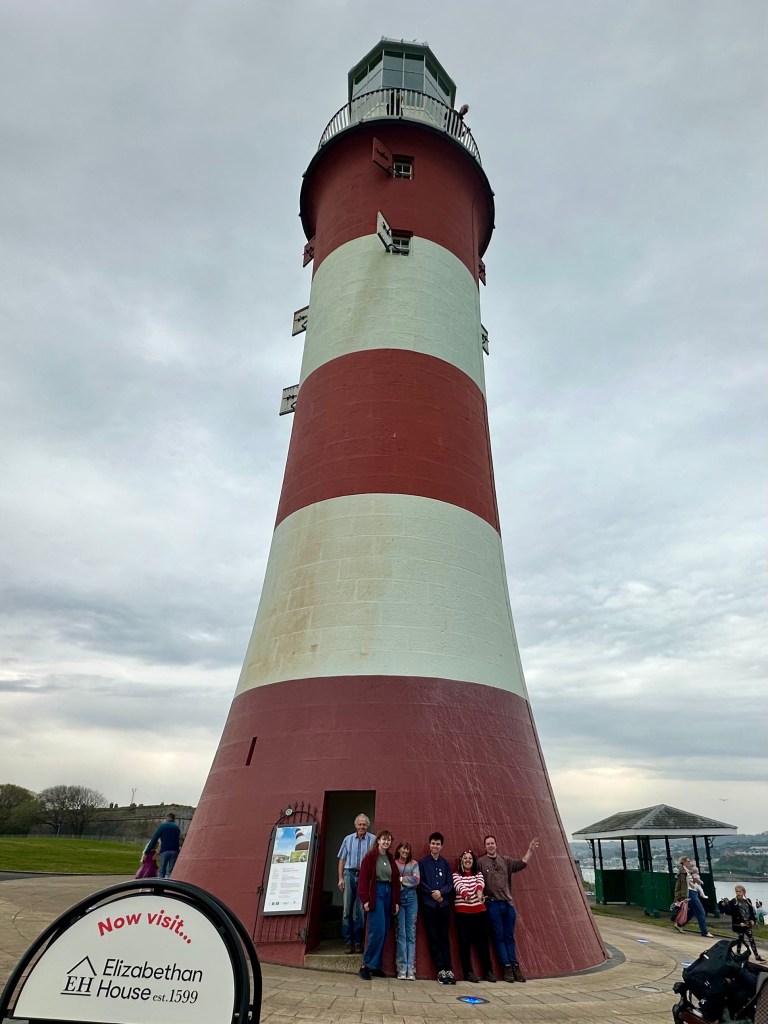
At the top (94 steps up!), you’ll find a balcony around the lantern room, offering 360-degree views of Plymouth and the sea. From there, you can spot the breakwater lighthouse, Drake’s Island, and Mount Batten lighthouse across the bay if you squint.
The History of the Eddystone Lighthouses
The Eddystone Reef has hosted four different lighthouses over the centuries. The first, built by Henry Winstanley in 1698, was an ambitious, whimsical feat of engineering, full of mechanical marvels. Constructing it 20km offshore, with only brief summer windows for access, was no easy task. Winstanley was even kidnapped by the French in 1697 during the build! Luckily, Louis XIV released him, saying, “We are at war with England, not with humanity.” Tragically, the lighthouse was destroyed in the Great Storm of 1703—just five years after completion—killing Winstanley along with it.
Next came John Rudyerd’s simpler wooden design, which lasted almost 50 years before catching fire in 1755. One of the keepers, Henry Hall, ingested molten lead during the blaze and miraculously survived for 12 more days in hospital.
Then came John Smeaton’s pioneering tower, the first to use interlocking stone blocks and hydraulic lime cement. This revolutionary design influenced lighthouse engineering for generations. Though the sea eventually undercut its base, the top half was relocated to Plymouth Hoe, where we visited it on this trip.
The current lighthouse, built by James Douglass in 1882, still stands on the reef today, casting its light over the same deadly waters. Standing atop Smeaton’s Tower, looking out at its successor on the horizon, it’s hard not to feel emotional about the legacy etched into that stubborn scrap of rock.
Day Two: A private charter boat to Douglass’ Eddystone Lighthouse
On Sunday, we saw Douglass’ tower and the base of Smeaton’s via private charter boat. Andy from Patricia Rose Charters took 12 of us out, and even the day before, it was touch and go whether the trip would happen due to sketchy winds. We ended up delaying by two hours for safety, and I was anxious about bringing everyone together only for the trip to fall through.
Two attendees had come all the way from Folkestone, Kent, building our trip into the grand finale of their holiday. The stakes were high, and I was immensely relieved when we set out across the waves toward the lighthouse.

We passed the Plymouth Breakwater Lighthouse and ventured into open water. A few of us clung to the back of the boat and got absolutely soaked as we raced through the waves. Gannets and seabirds danced in the wind, and the sea looked magical though the sky was overcast.
Then came gentle taps on my arm—people catching their first glimpse of Eddystone. The lighthouse is simply majestic. As the sun peeked from behind the clouds and kissed its side, the tower seemed to glow.
One attendee, born and raised in Plymouth, had only one item on his bucket list: to see Eddystone Lighthouse. As we circled it before heading back to shore, I felt so lucky to have helped make that moment happen.

Final Thoughts
I’m incredibly excited for the rest of the group trips this summer. While the weekend had its stressful moments, the purpose of these trips is to celebrate lighthouse heritage and bring people together. I’m proud to have facilitated that in some small way—and watching Lighthouse Explorers grow has been such a joy.
I can’t wait to see where we go next.
 Lighthouse Explorers