
History
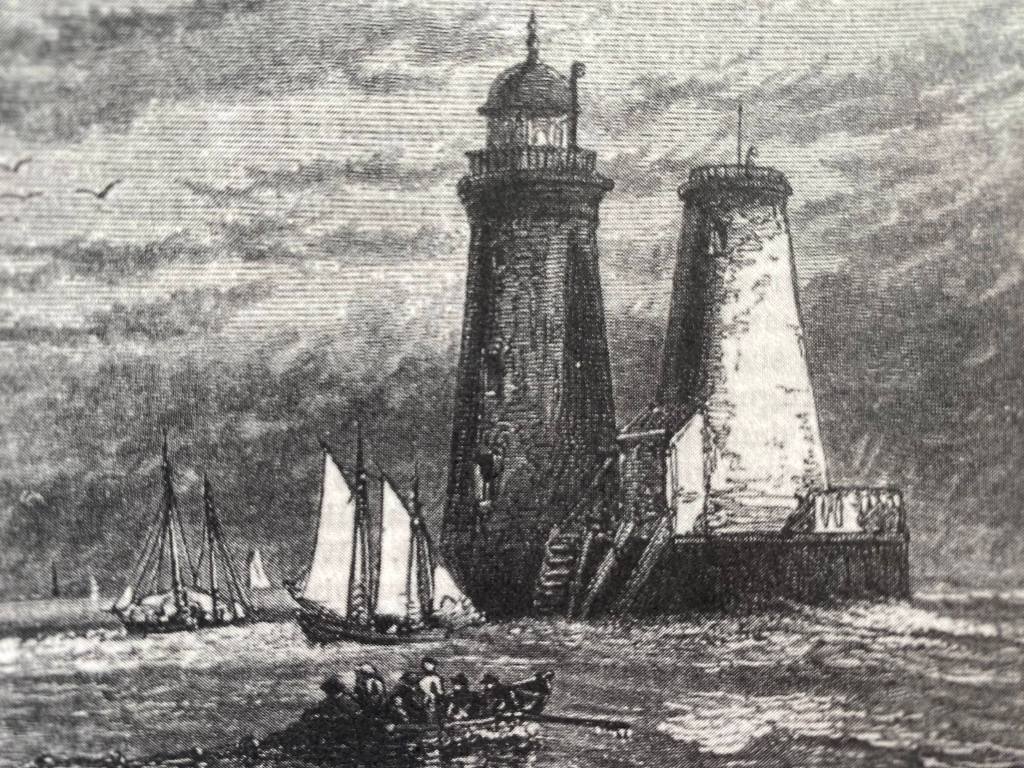
The original Whaleback Light was built on a brand-new constructed pier in 1829 for a combined cost of $19,960. It had issues with its structural integrity from the outset.
The first problem came with leaks developing, after a few high seas went over the TOP of the lighthouse! The keeper at the time struggled to manage it, and the lighthouse was almost flooded out. In 1837, sheathing was added to the tower, but this was a bit of a cover up for the existing issues caused by the original construction team.
Structural issues
The lighthouse had been built on a rocky surface, but this hadn’t been levelled off at all. Instead, the contractors just shoved little rocks in between the bottom of the tower and the rock it was built on. These obviously washed out almost immediately. The bottom stones for the lighthouse had also not been properly fixed to the ledge. This meant that overall the structural integrity of the lighthouse was incredibly undermined.
Colonel Thayer went to review the damage and thought it would be best to build a new lighthouse for around $75,000. However this was not approved by Congress.
The added sheathing only really worked to prevent the keeper from drowning, as the entire tower shook with every wave. Stephen Pleasonton said in April 1842, that he was ‘in daily expectation that the present building has been demolished by the force of the sea’.
It wasn’t until 20 years later, in 1869, that Congress took the action to build a new lighthouse next to the old one, for the $75,000 which had been quoted two decades ago. The two towers stood next to each other for a few more years, until the original lighthouse got cut down to its foundations.
Captain Ames: The Man, The Myth, The Legend
In 1886 the sea absolutely battered the windows of the lighthouse, and flooded the living quarters. At the time, the lighthouse keeper Captain Leander White of Newcastle, was abiding there. In desperation, he took his bed sheets and headed to the top of the tower.
He used the bed blankets as a masthead to gain the attention of other seafarers. The storm was so appalling that the sheet was ripped to bits, but at White’s last ebb, he was rescued by Captain Walter S. Ames. The lighthouse keeper was half-drowned, but safe.
The hero, Ames, then went on to become the Whaleback Lighthouse keeper in 1891. This absolute legend then went on to rescue every single occupant on a capsized boat near to the lighthouse, 8 years later in 1899. His assistant stayed behind in the lighthouse, as he was rightfully fearful, and called Jerry’s Point Life Saving Station for help. However, Ames had already rescued every single person before they’d even launched their surf boat.
Present day
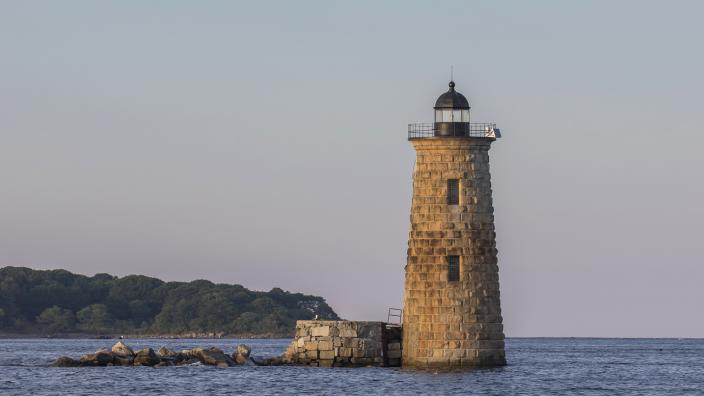
Today, the lighthouse is unattended and automated, like most lighthouses in the world. It’s officially a part of Maine, but protects ships entering Portsmouth Harbor, so it’s officially included as one of New Hampshire’s lighthouses.
Additional resources:
Snow, E. R. 1973. “Whaleback Light”, The Lighthouses of New England. pp127-131.
 Lighthouse Explorers